

Your Leading National Standard Slip-on Flange Supplier
Our company has a registered capital of 50 million RMB and is located in Yanshan Economic Development Zone, Yanshan County, Cangzhou City, Hebei Province, which is known as the "China Pipeline Equipment Manufacturing Base". The company's products has are Plastic Coated Steel Pipe, Anti-corrosion Steel Pipe, Bend Pipe, Galvanized Steel Pipe, Insulated Steel Pipe, Sonic Tube, Welded Steel Pipe, Seamless Steel Pipe, Elbow, Finned Tube, Slip-on Flange, Butt-weld Flange, Socket-weld Flange, Equal Tee, Reducing Tee etc.


Why Choose Us?
Customization
We can tailor our products to meet your specific requirements, including size, thickness, and coating.
Competitive pricing
We offer cost-effective solutions without compromising on quality.
Products application
The company's products are mainly used for transportation pipelines such as oil pipelines, natural gas pipelines, water pipelines, water supply networks, sewage treatment plants, fire protection pipelines, coal mine gas transportation, steel structure pillars, bridge and dock pile driving, and thermal heating projects.
High-quality products
Our pipes are manufactured using advanced technology and undergo strict quality control to ensure durability and performance.
Types of National Standard Slip-On Flange
A105N slip on raised face flange
It refers to raised face and material . We will know N means normalizing. Same as all forged steel fittings. RF (raised face) is one seal type of flange. It is the most common type, its gasket surface is raised above the bolting circle face.
A105N slip on flat face flange
FF means flat face. It is another common seal type of flange. FF flange has a gasket surface in the same plane as the bolting circle face, it usually mates with flange or flanged fitting. And flat face flanges can’t be bolted to a raised face flange.
A105N slip on ring type joint flange
There is another seal type RTJ (ring-type joint), it has a raised gasket face with the different ring groove machined in this face, RTJ flange can’t matched to RF flange or FF flange.
Benefits of National Standard Slip-On Flange
Cost-effective
They are economical due to simpler manufacturing processes.


Versatility
Suitable for low-pressure applications across various industries.
Ease of installation
They slide easily onto pipes, reducing installation time and effort.


Simple welding
Requires only fillet welding, making it straightforward to join to pipes.
Space-saving
The slip-on design has a low profile, ideal for space-constrained environments.


Interchangeability
Compatible with different flange faces, such as rf, ff, and rtj, enhancing flexibility in piping systems.
Application of National Standard Slip-On Flange
Oil and gas industry
Slip-on flanges are suitable for the oil and gas industry. They connect pipes and various other equipment effortlessly. Easy installation and other properties like flexibility make the most preferable solution.
Chemical processing
Slip-on flanges are corrosion-resistant and durable, which makes them suitable to withstand hazardous materials and corrosive substances.
Water treatment
Slip-on flanges connect pipes that carry clean water or wastewater. The leakage-free property prevents contamination.
Food and beverage industry
These flanges are suitable for the food and beverage industry since they are corrosion-resistant.
Shipbuilding
In shipbuilding, slip-on flanges connect various piping systems, ensuring their safe and effective operation at sea.
Power generation
In power plants, slip-on flanges connect pipes transporting steam, cooling water, and other fluids.
How Do Slip-On Flanges Work?
The operating principles behind Slip-On Flanges must be analyzed through their pipeline installation framework. These flange components serve to bind together pipes and valves and fittings when developing fluid and gas transfer systems. The operational sequence of Slip-On Flanges follows this sequence:
Pipe preparation
The pipe end preparation includes two steps: first manufacturing it to the specified length after which it gets smoothed out. The requirement for beveled edges does not exist in Slip-On Flanges since they differ from weld neck flanges which makes installation easier.
The pipe receives the flange by simple insertion
The worker feeds the pipe inside the flange opening. The inner bore of the flange can fit any pipe diameter because it is designed slightly wider than the pipe dimensions.
Positioning the flange
The flange receives placement at its proper position on the pipe so it can maintain alignment with related flange components or attached fittings.
Welding
Fillet welding occurs on both the inner and outer edges to firmly attach the Slip-On Flange to its pipe. The welds on both sides lead to a stable and leak-proof connection of the flange.
Bolting
Welding the flange to the pipe completes this step so that bolts can then secure it to connect with another flange in the piping system. The flange faces need a gasket for creating a strong seal.
Order Process

Packaging & Shipping
Transport Package: Standard Sea-worthy packing or as As required. If you have any special requests on this, please let us know advanced. We will refer to your email kindly.


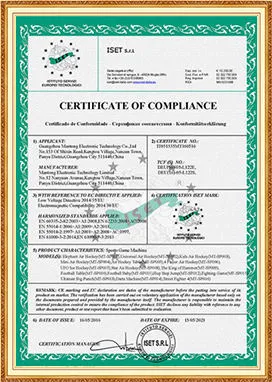
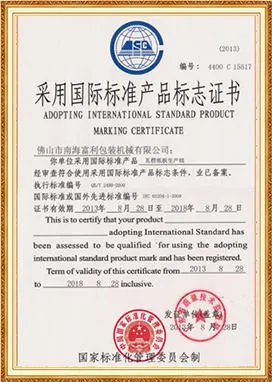
Certificate



FAQ
As one of the most professional national standard slip-on flange enterprises in China, we're featured by quality products and good service. Please rest assured to wholesale customized national standard slip-on flange from our factory. For pricelist, contact us now.
8 150 slip on flange, slip on forged steel flange, slip in flange